Old accounting problems rarely stay small. A bank account left unreconciled, a loan posted incorrectly, or expenses categorized the wrong way can roll forward for months or years. Eventually, those mistakes begin affecting financial reports, tax preparation, cash-flow decisions, and the confidence owners have in their numbers. That is when historical bookkeeping cleanup becomes more than an administrative project. It becomes a financial priority. This guide explains how older accounting errors build up, where they hide, how they can influence taxes and decisions, and when a full cleanup may be more practical than continuing to patch the books.

How Small Errors Become Expensive Over Time
Most accounting errors do not create an obvious crisis on the day they happen. A duplicate transaction may overstate an expense. An old customer balance may stay in receivables even after it should be cleared. A loan payment may be posted incorrectly. One mistake may look harmless, but repeated errors change the financial picture.
The problem grows when those balances roll into the next month and year. Reports are prepared from the same data, tax work may begin from those balances, and new entries are added on top of old mistakes. At that point, catch-up bookkeeping may not fix the underlying issue. The historical records themselves need review.
Where Old Accounting Errors Usually Hide
Years of accounting activity can create problems in places that are easy to overlook. Bank and credit-card accounts may contain unreconciled differences. Receivables can include invoices that were paid, written off, or duplicated. Payables may show vendor balances that no longer exist. Clearing accounts can hold merchant deposits, payroll items, or transfers that were never resolved.
Other issues include personal expenses mixed with business transactions, incorrect owner activity, loan balances that do not match lender statements, payroll liabilities that were not cleared, and inconsistent expense coding. An account reconciliation cleanup often reveals that the issue is not one bad transaction, but a pattern carried forward.
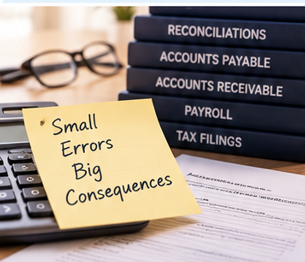
When Bookkeeping Errors Begin Affecting Taxes
Accurate tax reporting depends on accurate records. IRS guidance says business records should clearly show income and expenses and support items reported on tax returns. If revenue is missing, expenses are duplicated, deductions are overlooked, or personal costs are recorded as business expenses; taxable income may be wrong.
That does not automatically mean a prior return must be amended. The correct response depends on the error, entity, and return involved. Once a historical bookkeeping cleanup identifies a meaningful difference in income, deductions, credits, or tax liability, the business should review it with its tax professional.
Cleanup first. Tax decisions second.
Correct the accounting records, document the changes, and then determine whether any tax filing needs attention.